
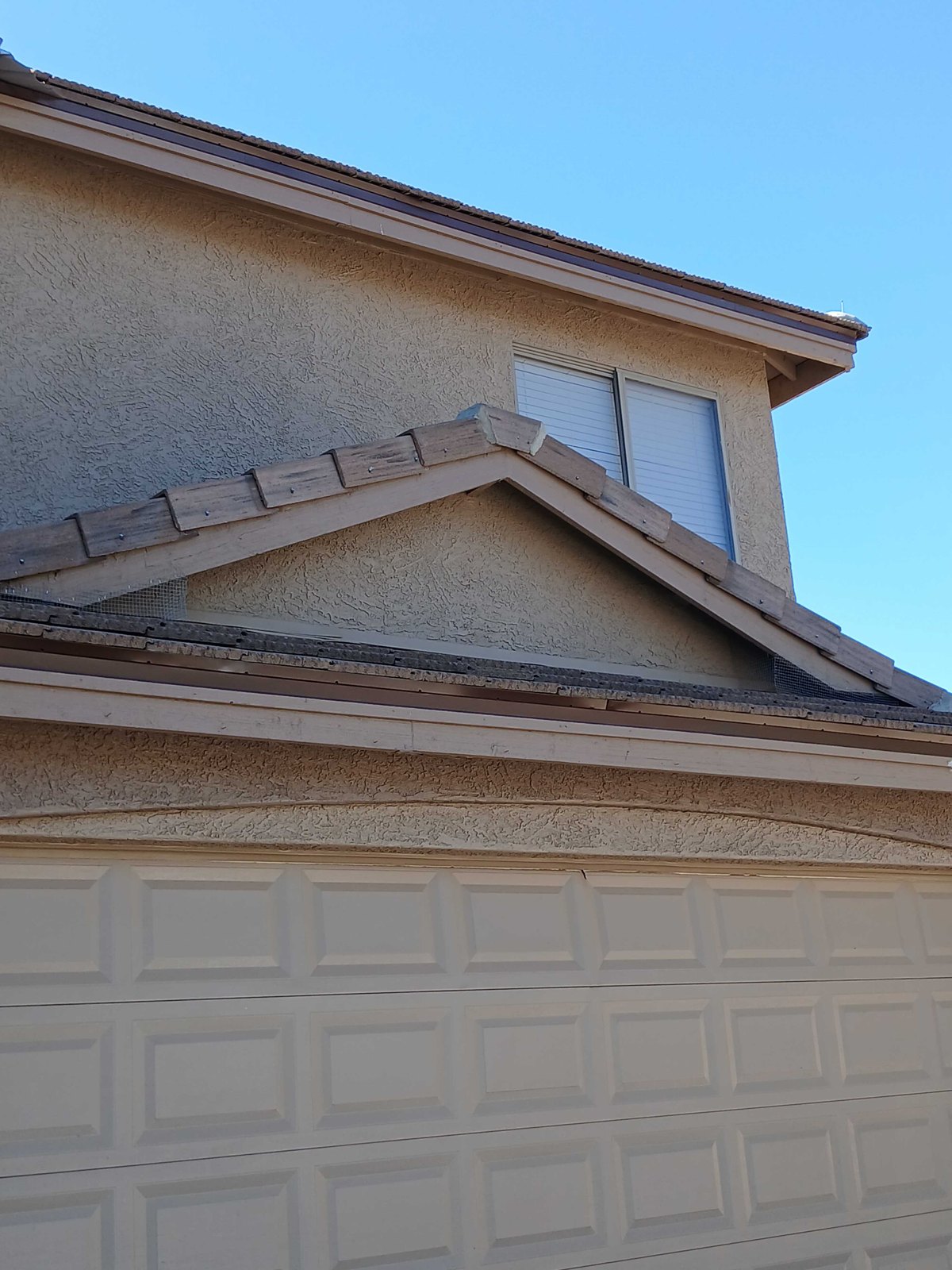
To keep pigeons from returning, identify the spaces they use and block access with a properly fitted exclusion system. Cleanup and reducing food sources support the work, but they do not close an open nesting pocket.
This pigeon control checklist is for Phoenix-area homeowners who have chased birds away, cleaned the same spot repeatedly, or tried a deterrent without lasting relief. Pigeon Pros has served Arizona since May 1999. These seven steps help you prepare for an inspection and maintain the areas protected afterward.
For help at your property, explore our professional pigeon control services or see our Phoenix pigeon control projects and service information.
1. Record exactly where pigeons return
Watch from the ground or another safely accessible location. Note where birds land, where they disappear, and where fresh droppings collect. A bird sitting on a ridge may be nesting in a nearby roof recess rather than on the ridge itself.
Photograph the same areas over several days. Tell the inspector whether activity is beneath solar panels, behind a sign, inside a roof return, or above a covered patio. These details help separate the access point from the mess below it. Avoid climbing onto the roof to investigate.
2. Reduce accessible food and water
Keep waste containers closed, collect spilled pet food and birdseed, and discuss intentional feeding with people using the property. Have leaks or drainage problems assessed where practical. Do not alter roof drainage or equipment to remove water.
These changes can reduce attractions, but an established sheltered nesting space may remain attractive even when you stop feeding birds. Treat food management as part of the plan rather than a promise that pigeons will leave within a set number of days.
3. Inspect concealed spaces before closing them
An opening that appears empty from below may contain birds or occupied nests. Before screening or netting is installed, the full space needs inspection. Never seal birds behind a barrier. Ask how the installer will handle any birds or occupied nests found during the work.
The inspection should also look for alternate entrances. Closing the most visible gap while leaving a corner open can allow continued access to the same space. Our pigeon control process starts with assessing the property before recommending a solution.
4. Match the barrier to the problem area
- Roof recesses and openings: fitted screening or suitable netting may restrict access to the sheltered space.
- Covered patios and larger recesses: a netting system may be appropriate when a secure perimeter and maintenance access can be provided.
- Exposed ledges: birdwire or spikes may suit specific perching surfaces when coverage matches how birds use them.
- Solar arrays: suitable perimeter screening should account for brackets, wiring, airflow, and future servicing.
Read more about pigeon deterrent installation and solar panel bird proofing. Ask why the proposed method fits your roof. A ledge deterrent will not close a separate opening under solar panels.
5. Arrange cleanup as part of the scope
Confirm which surfaces and accessible nesting material are included in the cleanup work. Tell the inspector about existing deterrents, staining, and any areas you cannot see clearly. Ask whether repairs to roofing or other building materials require a separate contractor.
Cleanup removes existing material; exclusion addresses access. Having the roof cleaned without closing the nesting space leaves the route back available. Likewise, installing a barrier does not automatically include every cleanup task unless the estimate specifies it.
6. Check the finished perimeter and protected areas
Ask the installer to show you completion photographs and identify the exact areas treated. Corners, penetrations, uneven roof surfaces, and access panels deserve attention. Understand which nearby ledges or recesses remain untreated.
Pigeons elsewhere on the roof do not necessarily mean a barrier has failed. Birds entering the protected space, a loose screen edge, or a gap opened during maintenance calls for a closer look. Document the location so the team can assess the specific issue.
7. Recheck after roof or solar maintenance
Let roof, solar, HVAC, and sign contractors know where exclusion materials are installed. After other work, check accessible areas for disturbed screening or netting. Do not remove or modify the installation without discussing how access will be restored.
Keep your estimate and any written guarantee together. Guarantee eligibility and coverage vary by project; confirm the applicable terms rather than assuming every part of the property is covered.
Common questions about keeping pigeons away
Will a fake owl solve an established pigeon problem?
We do not recommend relying on a decoy to protect an open nesting space. It does not physically prevent access. See our discussion of plastic owl deterrents before buying another scare device.
Why are pigeons returning after screening was installed?
Possible explanations include a remaining entrance, loose material, an untreated nearby space, or damage from later maintenance. An inspection is needed to distinguish these situations; seeing birds somewhere on the property is not enough to identify the cause.
Can one installation protect the whole roof?
That depends on the design and scope. Ask which openings and perching surfaces are included and which are outside the estimate. A barrier protects the area it encloses, not every nearby surface.
Get a pigeon control plan for your home
Pigeon Pros provides free in-person inspections across the Phoenix metro area. Request your free pigeon control inspection or call 480-888-8838. We will assess the spaces birds are using and explain suitable cleanup and exclusion options.