Pigeon Pros Inc Serving Arizona since May 1999

Call 480-888-8838

Category: Blog

Explore pigeon control tips from Pigeon Pros Inc, including solar panel protection, roof cleanup, and prevention for homes and businesses across Phoenix.

  • 9-Point Pigeon Abatement Inspection Checklist for Apartments

    A useful apartment pigeon inspection starts with a location record, not a product choice. For each affected building area, note where birds land or enter, where droppings appear, when residents report activity and who can arrange access. This nine-point checklist helps managers prepare for a professional inspection and compare the proposed scope.

    Record observations from accessible ground-level or normally occupied areas. Do not ask residents or maintenance staff to climb roofs, reach beneath solar panels or disturb nesting material to complete the checklist.

    Nine areas to record before the inspection

    1. Roof edges and parapets: Note recurring perches, streaking below edges and the building or elevation involved. Distinguish the location of the birds from where droppings land.
    2. Eaves and sheltered openings: Identify visible entry points or repeated flights into recesses. Record nearby access restrictions and any earlier screening.
    3. Utility ledges and equipment areas: Note activity around equipment without touching wiring or opening equipment covers. Arrange access with the responsible service provider when needed.
    4. Balconies and patios: Record the affected unit or stack internally, whether the ledge above is involved and how resident access will be coordinated. Keep personal resident details out of public project photos.
    5. Stairwells and breezeways: Mark recurring droppings near shared routes and ask how cleanup or installation would be scheduled around occupants.
    6. Carports and covered parking: Identify the beams or sheltered spaces being used and which parking bays would need to be clear during the work.
    7. Signs and light fixtures: Record the exact feature rather than describing an entire building as affected. Ask whether access to the fixture must be preserved for maintenance.
    8. Solar arrays: Note visible entry beneath panels, existing screening and any system restrictions supplied by the solar provider. Include the array location in the inspection request.
    9. Trash and food areas: Record unsecured containers or recurring food waste for the property’s maintenance plan. Ask how these observations relate to the nesting and perching areas elsewhere.

    Turn observations into an inspection brief

    Use one row per location in your property log: building or area, observed activity, photograph date, previous treatment and access contact. Keep urgent operational issues separate from routine observations so the appropriate property team can assess them promptly. A photograph taken safely from the ground is useful; it does not replace the on-site inspection.

    For properties in the city, our Phoenix pigeon control and removal page explains the inspection approach. We also serve Peoria and Chandler; those pages show completed residential examples of screening, netting and ledge deterrents.

    Separate cleanup from access prevention

    Ask which accessible droppings and nesting material will be removed, which surfaces will be cleaned and what limitations apply. Then ask which openings or perches will be treated. A cleanup line item alone does not explain how future access to a sheltered nesting space will be addressed.

    Our pigeon removal services guide explains the different roles of cleanup, screening, netting and perch deterrents. For larger sheltered spaces, discuss whether commercial pigeon netting is appropriate and how future maintenance access will work.

    Check solar arrays as a separate part of the scope

    Ask whether cleanup beneath the panels is accessible, how the perimeter would be screened and who will coordinate any solar-provider requirements. Review our solar panel bird proofing service before the visit. Treating an array does not automatically address another building’s ledges or roof openings.

    Compare written proposals by location

    • Which buildings and individual areas are included?
    • What cleanup and preparation is included at each location?
    • Which materials are proposed, and why?
    • Who arranges resident, roof, parking and equipment access?
    • What exclusions, maintenance needs and guarantee terms apply?

    Keep the agreed location list with the estimate so the property team can review the completed work against the same scope. If a treatment is staged across several buildings, have each phase identified clearly.

    Request an apartment-property inspection

    Pigeon Pros has served Arizona since May 1999 and offers free in-person inspections. Request an inspection for your apartment property and share your affected-area list, previous treatments and access arrangements. We can assess the site and explain a property-specific plan.
  • Solar Panel Bird Proofing: Questions to Ask Before Installation

    Solar Panel Bird Proofing: Questions to Ask Before Installation

    Before adding bird-proofing mesh to a solar array, confirm the proposed materials, attachment method and maintenance access. Your solar installer or manufacturer is the source for requirements that apply to your system. A general article cannot confirm warranty coverage for an individual installation.

    Pigeon Pros offers solar panel bird and pigeon proofing across the Phoenix metro area. We begin with a free in-person inspection and explain the proposed cleanup and screening in the estimate. These questions can help you prepare.

    1. Which system documents should I have ready?

    Locate the panel model information, installation paperwork and any roof or solar warranty documents you already have. Share system-specific restrictions with the bird-proofing installer before the scope is finalized. If you cannot find the documents, ask your original solar installer which guidance applies.

    Keep the equipment warranty, original installation coverage and new bird-proofing workmanship terms separate. Ask the responsible provider to explain its own coverage rather than assuming one guarantee replaces another.

    2. How will the mesh attach to my array?

    Ask which mesh and fasteners are proposed, where they will attach and whether any alteration to the panels or roof is planned. Request enough product detail for your solar installer or manufacturer to review the approach. A description such as “no-drill” alone does not confirm compatibility or warranty coverage.

    Also ask how the installation will account for ventilation, drainage, wiring clearance and future service access. If your solar provider needs to assess or repair the system first, arrange that before bird-proofing work begins.

    3. What cleanup is accessible and included?

    Have the estimate identify the nesting material and droppings that can be reached, the areas to be cleaned and any access limitations. Do not assume all material beneath every panel is accessible or that panel removal is included. Ask whether another contractor’s involvement is needed.

    The cleaning method should follow the applicable panel and roofing guidance. Let the installer know about existing faults, roof leaks or previous work; bird proofing does not substitute for solar-system or roofing repairs.

    4. Does the rest of the roof need attention?

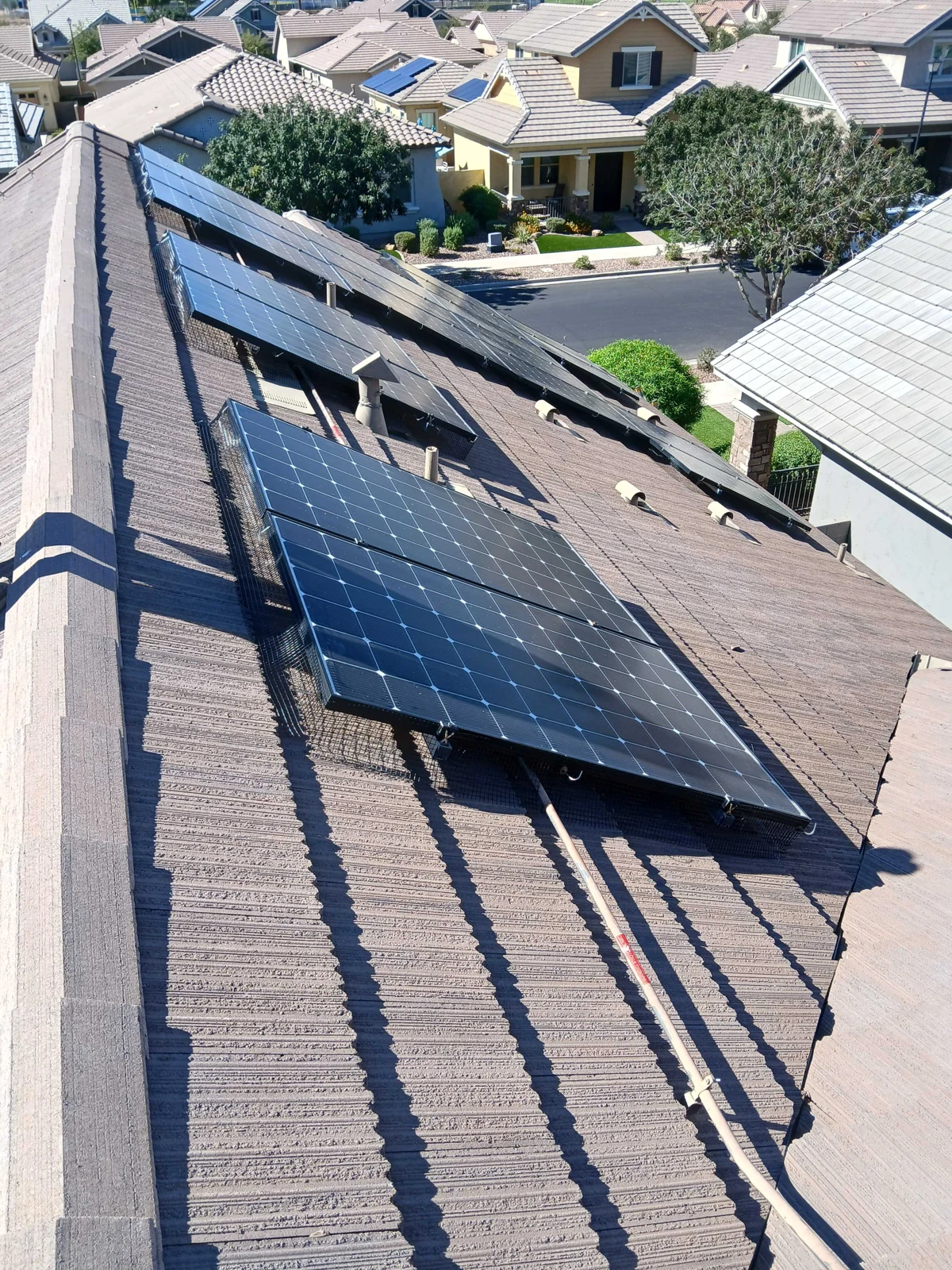
    Completed screening along the perimeter of a solar array at a Gilbert home
    Actual Pigeon Pros solar screening at a Gilbert home. The wider project also addressed separate nesting areas on the roof.

    Protecting the array does not close another roof recess or treat a separate ledge. Our Gilbert pigeon control projects include an installation combining solar screening with nine nesting areas and five ledges. The example shows why an inspection considers both the array and surrounding structure.

    Our Peoria pigeon control examples also include solar-panel perimeter screening. Use the photos to discuss the type of problem you have, rather than treating another property’s scope as a standard package.

    5. What records should I keep?

    • The written estimate identifying the array and other treated areas.
    • The proposed materials and attachment details.
    • Any system-specific guidance supplied by your solar installer or manufacturer.
    • Before-and-after photographs provided with the work.
    • The invoice, maintenance instructions and applicable guarantee terms.

    Ask who to contact if screening loosens, birds return or future solar servicing requires temporary access. Agree on those arrangements before installation.

    What does Pigeon Pros guarantee?

    Pigeon Pros offers a five-year workmanship guarantee, with no-pigeon coverage available in some cases. Review the guarantee and coverage information and the terms for your project. This is separate from any panel manufacturer’s or solar installer’s coverage.

    Start with an inspection of your property

    Pigeon Pros has served Arizona since May 1999. See our Phoenix pigeon control service for roof and commercial examples, or request a free in-person solar bird-proofing inspection. Tell us where birds enter, whether screening is already present and what your solar provider requires.

  • Do Pigeon Spikes Damage Roof Tiles? What to Know

    Do Pigeon Spikes Damage Roof Tiles? What to Know

    Do pigeon spikes damage roof tiles? They can if the attachment, removal or roof access is unsuitable. A spike strip is not a guarantee against damage, and no fixing method is right for every roof. Before installation, ask how the tile condition, mounting surface and product instructions will be checked.

    This guide explains what to discuss during a pigeon-control inspection. It is not a roof-access or installation tutorial; you can describe the problem and share photographs taken from the ground.

    First decide whether spikes fit the problem

    Spikes are a perch deterrent for selected ledges and similar surfaces. They do not close a sheltered opening or the gap beneath a solar array. If birds are nesting behind a roof feature, screening or netting may be more suitable. An inspection should identify where pigeons land and where they actually enter.

    Our pigeon removal services guide explains how cleanup, exclusion and deterrents fit together. Choosing the right treatment matters as much as choosing a fixing.

    What to ask about roof-tile protection

    • Condition: Are any tiles already cracked, loose or deteriorated? Document existing issues before work begins.
    • Attachment: Which product and mounting method will be used, and why is it suitable for this surface?
    • Compatibility: Will the installation follow the deterrent and roofing manufacturers’ applicable instructions?
    • Water and access: How will the work preserve drainage and allow future roof maintenance?
    • Responsibility: Who handles existing roof defects or repairs if a roofing specialist is needed?

    Adhesive versus mechanical fixings

    Do not assume that adhesive is automatically harmless or that a screw is suitable simply because it holds firmly. Product compatibility, surface condition and the proposed mounting point all need review. Ask the installer to explain the attachment method rather than accepting a universal promise that it cannot affect the roof.

    If you have a roof warranty, ask the warranty provider about the proposed attachment before work starts. A pigeon-control workmanship guarantee is separate from roof warranty coverage.

    A Chandler example: ledges and roof peaks needed different treatments

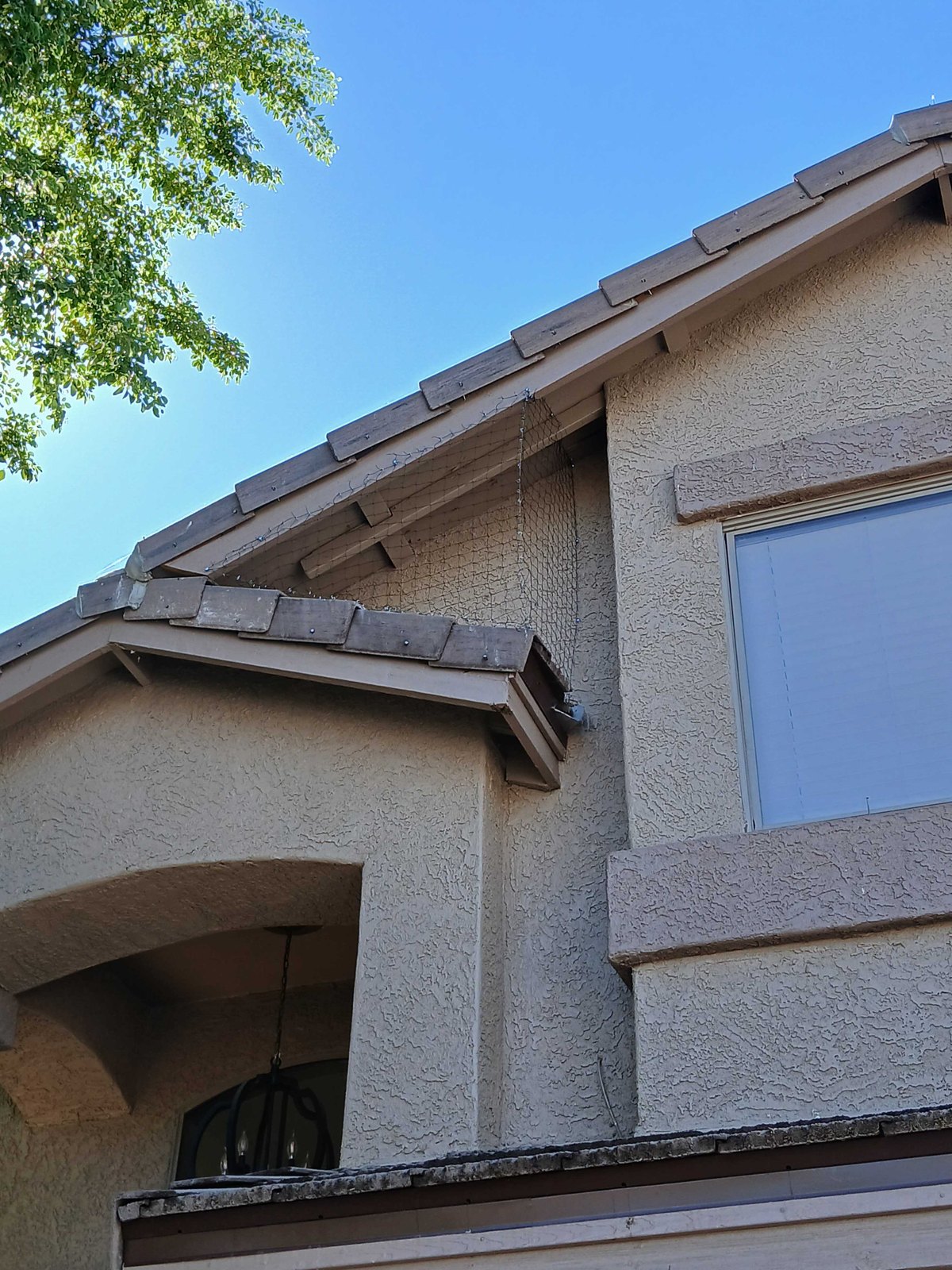
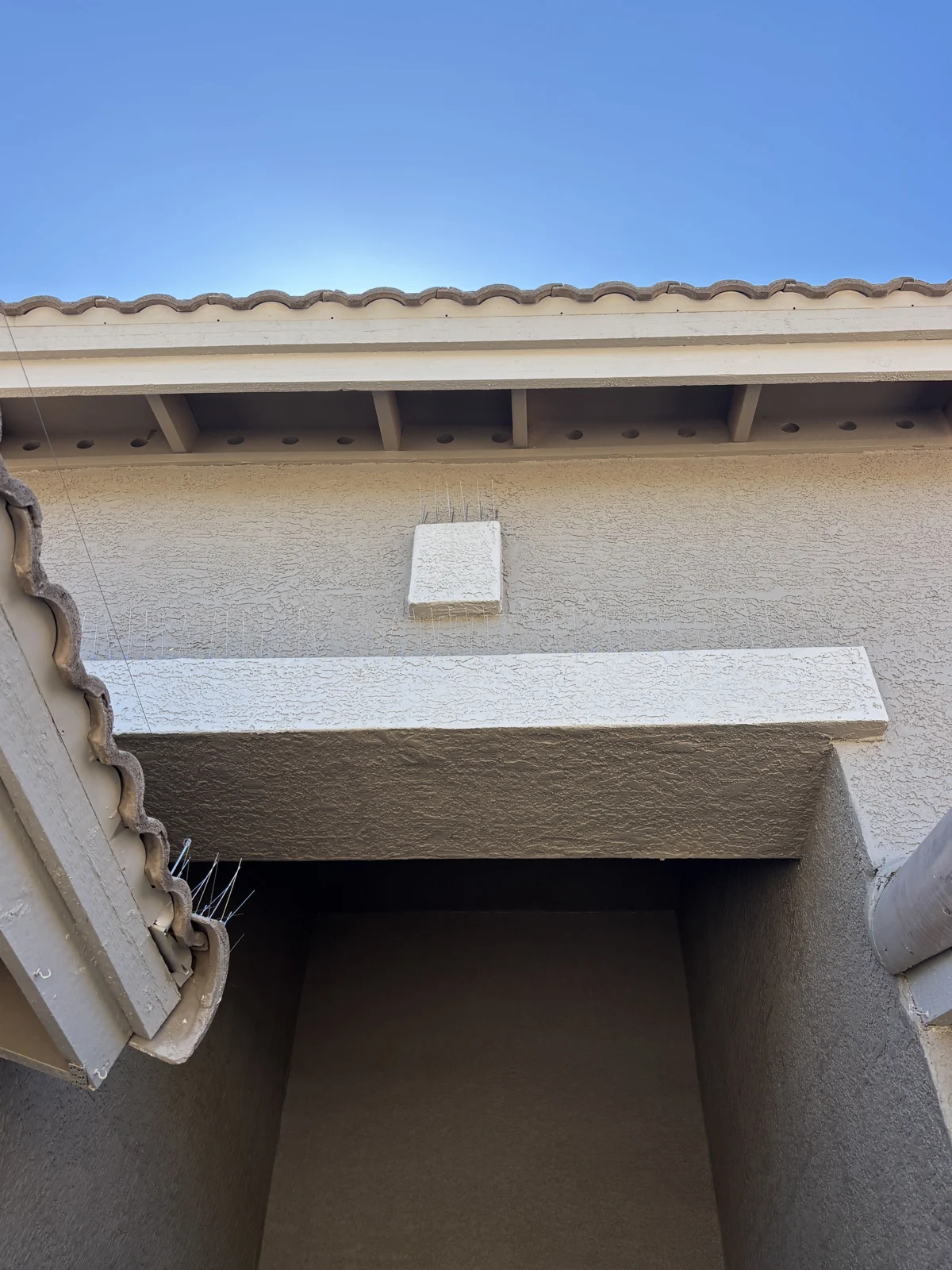
    Completed pigeon deterrents above the entrance of a Chandler home, viewed from below
    Actual Pigeon Pros work in Chandler: the project combined entrance-ledge spikes with birdwire on roof peaks and gables.

    This completed project illustrates why the treatment is selected for each surface. See the full example and other roof-opening installations on our Chandler pigeon control page. It does not establish which fixing is appropriate for a different roof.

    What if old spikes are not working?

    Tell your inspector where birds still land, whether nests remain nearby and whether any strips appear loose. Removing old strips can require a separate plan, especially where the attachment or tile condition is unknown. Avoid pulling or prying them off yourself.

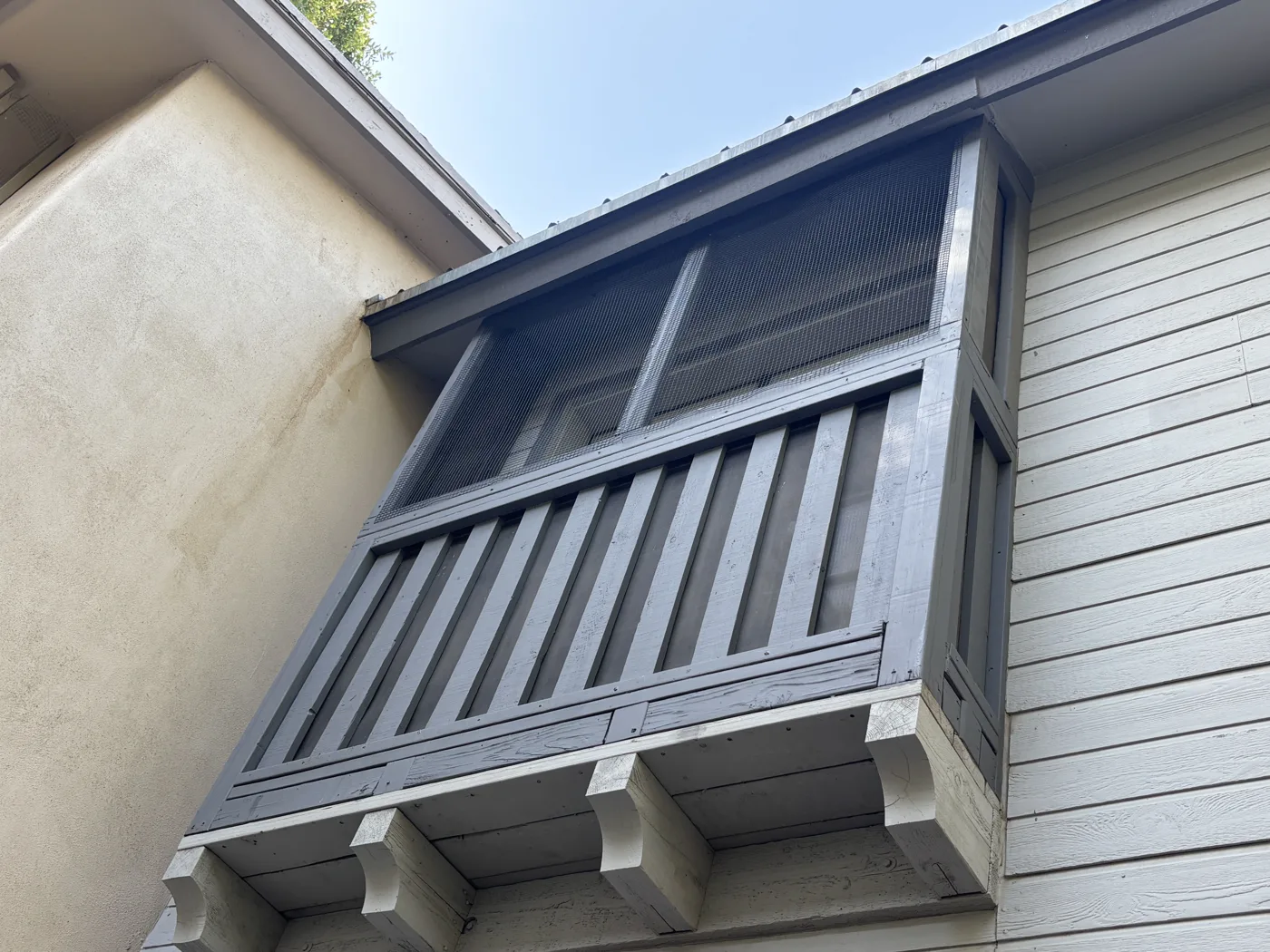
    One of our completed Peoria pigeon-control projects involved removing old spikes from a small roof above a window and installing netting after cleanup. That property needed a different approach to the protected space, not simply more spikes.

    Do spikes keep pigeons from beneath solar panels?

    Perch deterrents do not by themselves close the array perimeter. For birds entering beneath panels, review our solar panel bird and pigeon proofing service. The inspection should consider accessible nesting material, perimeter gaps and any separate roof nesting areas.

    Arrange a property-specific inspection

    Pigeon Pros has served Arizona since May 1999. We offer a free in-person inspection and an estimate explaining the proposed cleanup and proofing. For a Phoenix property, see our Phoenix pigeon control and removal service, or request your inspection. Ask which areas, materials and guarantee terms are included before scheduling the work.

  • Pigeon Cleanup in Mesa: Planning Roof, Patio and Ground Work

    Pigeon Cleanup in Mesa: Planning Roof, Patio and Ground Work

    When pigeon droppings keep appearing around a Mesa home, the cleanup may involve more than the visible patch on the ground. A sheltered nesting area above a patio, an adjacent roof surface, and the ground beneath the roof can all belong in the same cleanup plan.

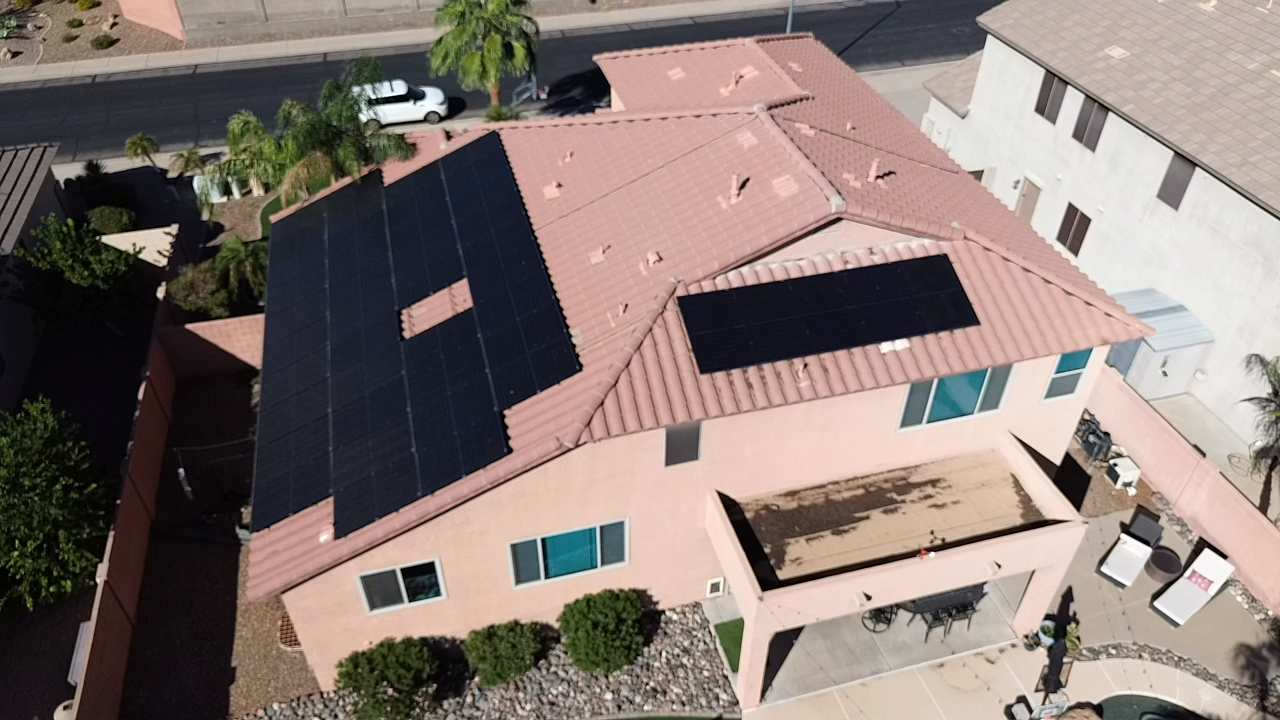
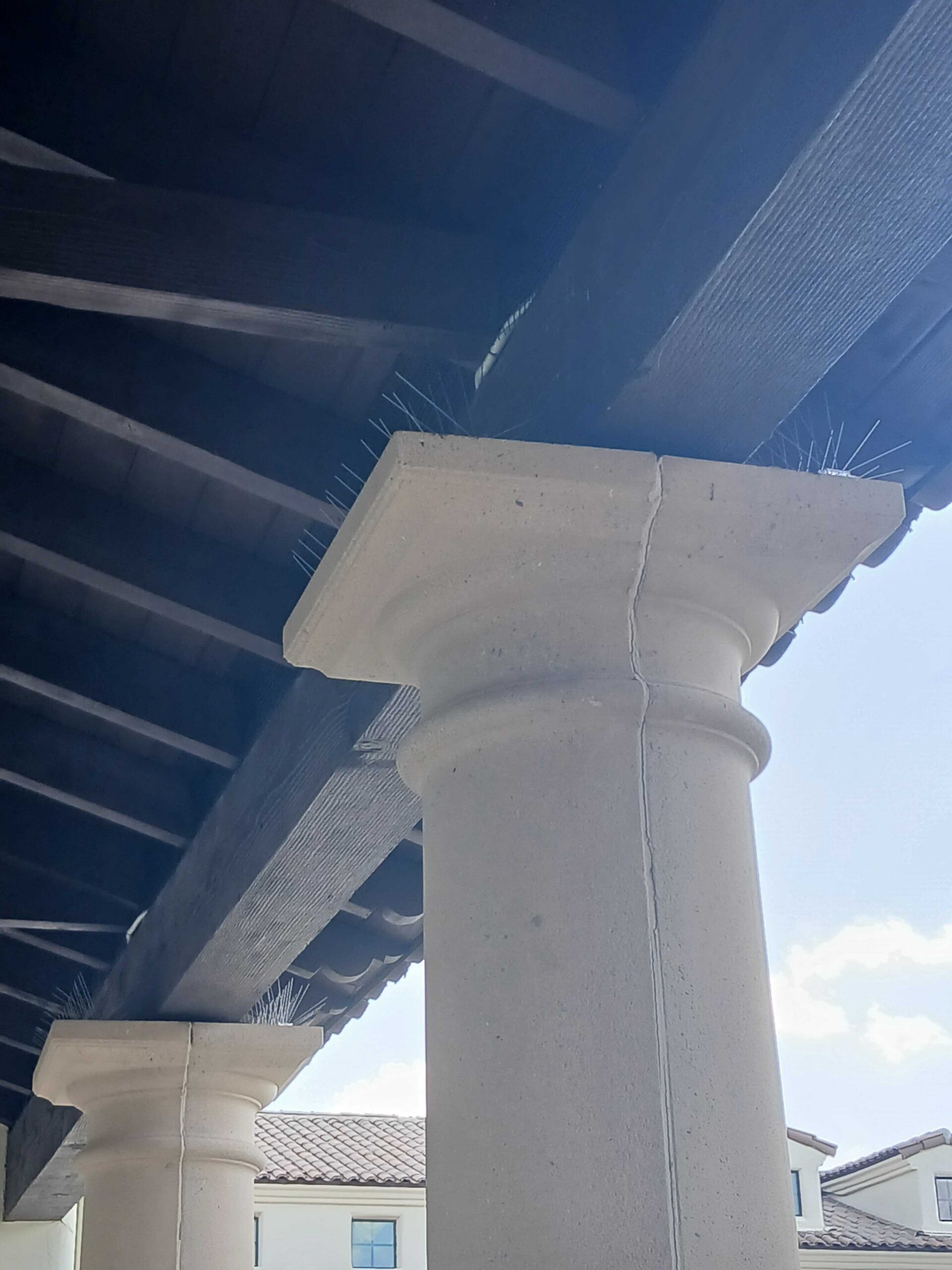
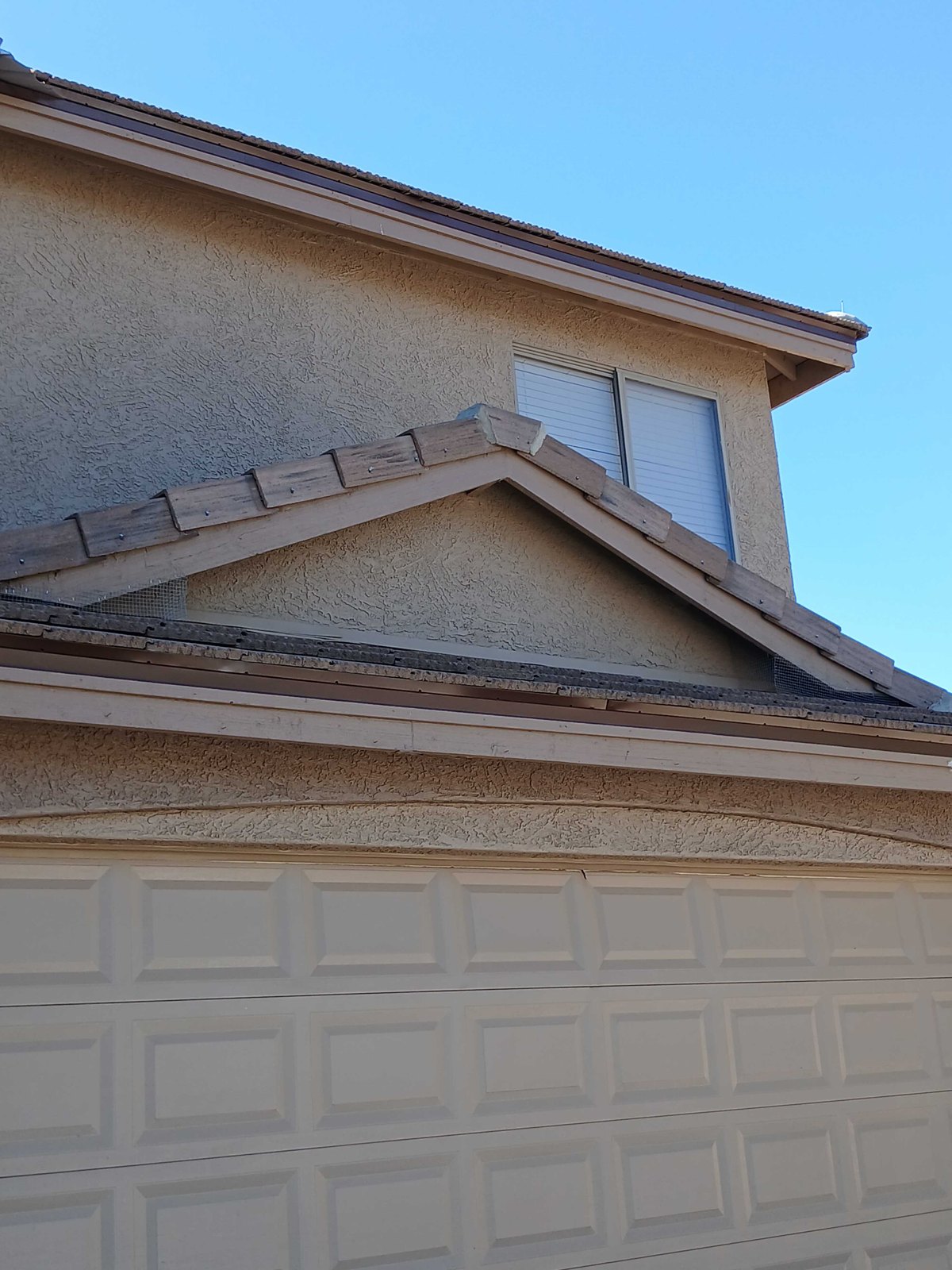
    A Pigeon Pros Inc job completed in Mesa on October 19, 2026 included affected roof and ground areas beneath the solar installation, the back patio roof, and removal of loose droppings and nests. The inspection overview shown above comes from that project. It illustrates the different roof levels involved; it is not a before-and-after claim.

    Three cleanup zones in one Mesa project

    The written scope helps explain what a homeowner should clarify before work begins:

    • Affected roof areas: identify the accessible buildup and nesting material, including areas associated with the solar installation.
    • The back patio roof: treat this as its own surface rather than assuming that cleaning the main roof also includes it.
    • Ground areas below: specify the affected areas that need cleaning as part of the job.

    On this project, the work order called for bagging and removing loose droppings and nests, followed by cleaning affected surfaces. It also included screening around two solar arrays and at four roof locations. Cleanup and exclusion were related parts of the work, with different purposes.

    Remove the buildup, then clean the appropriate surfaces

    Collecting loose waste and nesting material is different from washing a surface. Pigeon Pros’ cleanup process addresses loose material first and uses cleaning methods appropriate to the surfaces involved. Pressure washing may be suitable for some affected areas; it is not a universal treatment for every roof material or solar component.

    The inspection should establish access limitations and any concerns about the surface underneath. Removing droppings does not repair roof damage, restore every old stain, or certify that electrical equipment is working correctly. Any separate roof or solar repairs should be addressed with the appropriate contractor.

    Read more about our pigeon cleanup and nest-removal service and discuss the specific areas you want included.

    Plan for the area below the work

    Tell us about patio furniture, outdoor equipment, plants, pets, and access gates before the appointment. Ask which items should be moved and which areas should remain clear while the crew works. There is no need to climb up or disturb nesting material to prepare.

    A useful walkthrough connects the roof-level activity to the mess you can see from the ground. It also makes clear whether a lower patio roof is part of the job and how affected ground areas will be left at completion.

    Why cleaning alone may not stop new droppings

    Cleaning removes existing buildup. If pigeons can still enter a nesting space or use the same perch, new droppings can accumulate. The Mesa job therefore included screening as well as cleanup.

    Our articles on the two screened solar arrays and four roof-screening locations explain those separate portions of this same project. The appropriate combination for another property depends on the inspection.

    What to confirm before scheduling cleanup

    1. Which roof, patio-roof and ground areas are included?
    2. What loose material and accessible nests will be removed?
    3. Which surfaces can be cleaned, and what limitations apply?
    4. What should you move or keep clear before the crew arrives?
    5. Is exclusion included, or is the estimate for cleanup only?
    6. Are any repair needs or inaccessible areas outside the quoted work?

    Costs depend on access, buildup, surface conditions and the agreed prevention work. A photograph can start the discussion, but an in-person inspection lets us assess the actual job.

    Book a free pigeon-removal inspection in Mesa

    Pigeon Pros Inc has served Arizona since May 1999. For pigeon removal and control in Mesa, AZ, we can assess the source of the recurring mess and explain cleanup and exclusion options.

    Request a free in-person inspection or call 480-888-8838.

  • Pigeon Control for Mesa Roof Eaves: Screening Four Problem Areas

    Pigeon Control for Mesa Roof Eaves: Screening Four Problem Areas

    Pigeons on roof eaves can be using an exposed perch, a sheltered roof junction, or an opening that needs exclusion. Those are different problems. Effective pigeon control in Mesa begins by locating the space the birds are actually using before choosing screening, netting, bird wire or spikes.

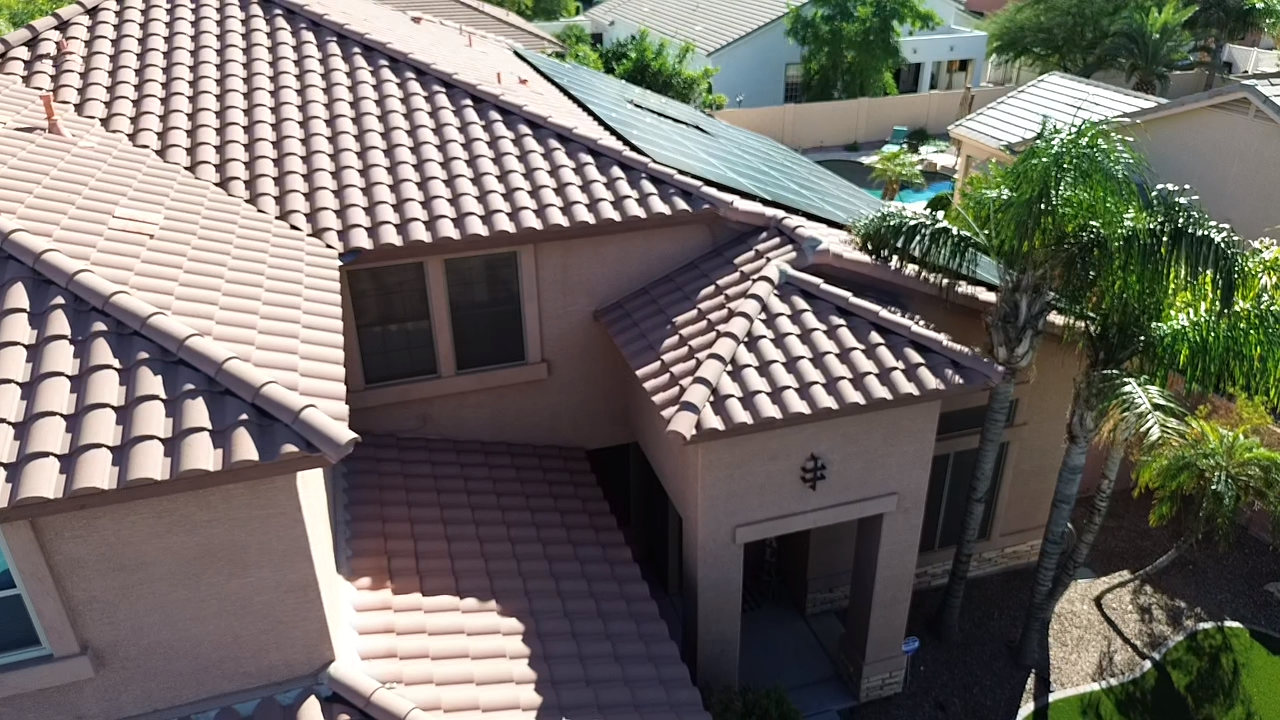
    A Mesa project completed by Pigeon Pros Inc on October 19, 2026 included screening at four roof locations as well as two solar arrays. The featured image is an inspection photograph of the home’s roof junctions, not an after-treatment photograph. It shows why a roof should be assessed as several connected areas rather than a single landing surface.

    Why the roof openings mattered on this Mesa job

    The documented scope specified half-inch black PVC-coated galvanized screen in four roof spots. Solar perimeter screening was a separate part of the same job. Loose droppings and nests were also included in the cleanup work.

    For a homeowner, the important distinction is that solar screening does not close an adjacent roof recess. Likewise, treating one visible eave does not address every opening on another roof level. A useful inspection identifies and photographs each area proposed for treatment.

    Perching versus sheltered nesting

    Watch from the ground for where birds land and whether they disappear into a protected space. Droppings below a ledge can help locate activity, but they do not by themselves show whether a nest is present.

    • Exposed landing surface: a suitable deterrent may reduce the available perch.
    • Accessible recess or opening: fitted screening or another exclusion system may be needed to restrict entry.
    • Larger sheltered space: properly planned netting may be appropriate, depending on the boundaries and access requirements.

    The choice depends on the structure. No single product is the correct treatment for every eave, ledge or roof junction. Our roof pigeon-control service starts with that property-specific assessment.

    What should happen before an opening is closed?

    Existing birds and nesting activity must be assessed before exclusion. The agreed cleanup should identify which droppings and nesting material can be accessed and removed. Screening should not simply conceal an unresolved nesting area.

    Attachment points, edges and irregular roof contours also need attention. The installation must suit the structure and preserve required ventilation and maintenance access. If the roof itself needs repair, clarify that separately; pigeon exclusion is not a substitute for repairing a damaged roof.

    Questions that make a roof-screening estimate clearer

    1. Which roof openings and perching locations are included?
    2. Can the inspector show the proposed treatment areas in photographs?
    3. What cleanup is included before the barriers are fitted?
    4. Why is screening, netting or a perch deterrent suitable for each location?
    5. How will future roof work or equipment servicing affect access?
    6. What follow-up and written guarantee terms apply?

    For the separate solar portion of this same Mesa project, see our two-array solar-screening case study. The two articles describe different parts of one documented job.

    What to watch after installation

    From a safe ground-level position, note any repeated entry into a treated opening, new droppings, or visible displaced material. Let the installer assess the location rather than climbing up or modifying the barrier yourself. Pigeons landing on an untreated part of the property and pigeons entering a screened opening are different observations.

    Pigeon Pros’ five-year workmanship and defect guarantee has written terms and exclusions. Ask how it applies to the work in your estimate.

    Arrange a Mesa pigeon-control inspection

    Pigeon Pros Inc has served Arizona since May 1999. Our Mesa pigeon control and removal service covers assessment, cleanup and appropriate exclusion for the areas affected.

    Request a free in-person inspection or call 480-888-8838. Tell us where you see the birds; there is no need to climb onto the roof before we visit.

  • Pigeons Under Solar Panels in Mesa: A Two-Array Screening Project

    Pigeons Under Solar Panels in Mesa: A Two-Array Screening Project

    Pigeons repeatedly entering the space beneath your solar panels need more than a deterrent on a nearby ledge. Solar panel pigeon proofing in Mesa starts with identifying the accessible openings, assessing existing nesting activity, and planning cleanup before fitting the perimeter screening.

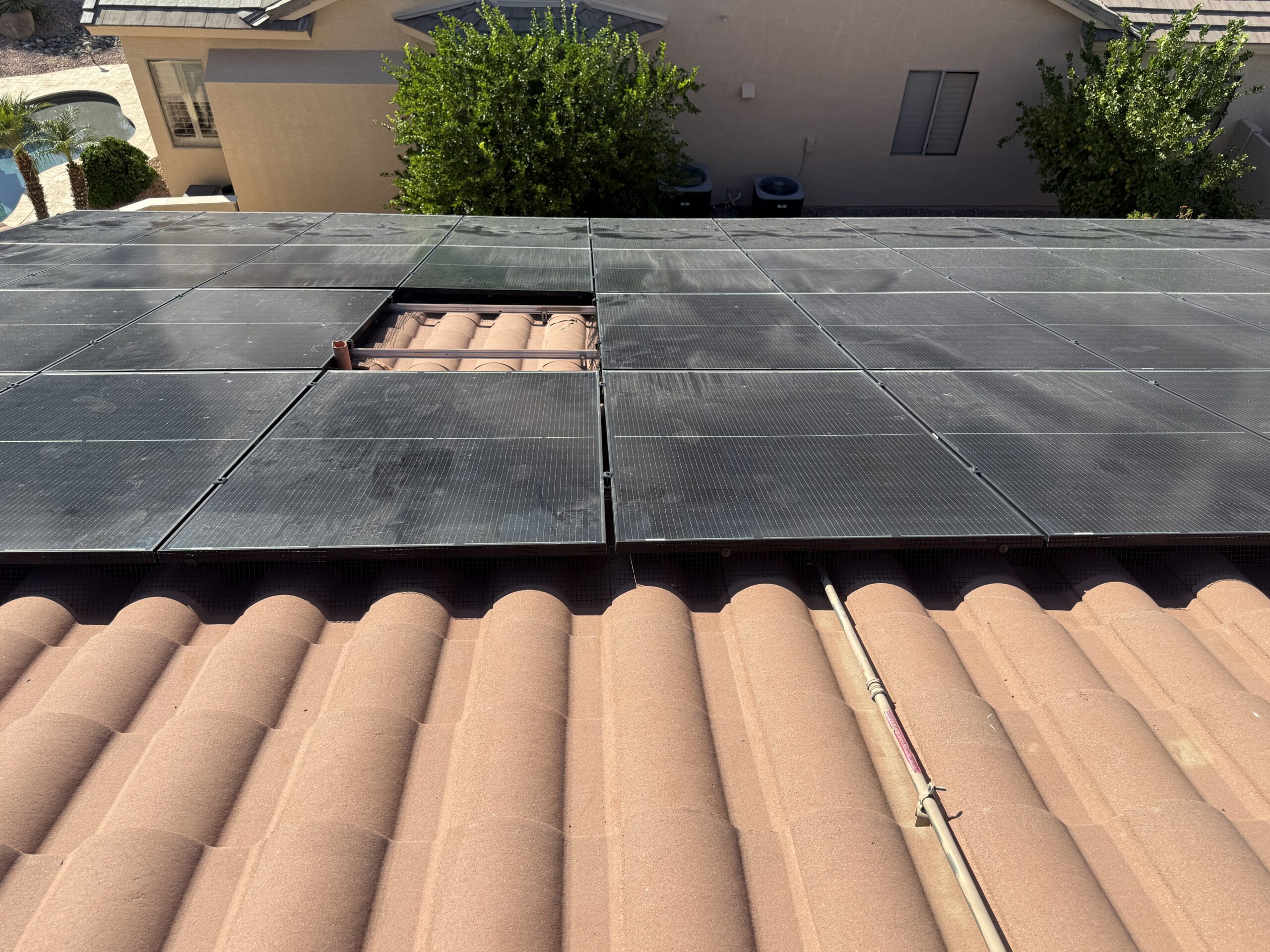
    A Pigeon Pros Inc project completed in Mesa on October 19, 2026 illustrates that approach. The documented work included screening around two solar arrays, screening at four additional roof locations, and cleanup of affected roof and ground areas. The featured photograph shows the array after the screening work.

    What the Mesa project included

    The project specified half-inch galvanized screening with a black PVC coating around the two solar arrays. It also included bagging and removing loose droppings and nests, cleaning the back patio roof, and washing affected surfaces. The roof openings were treated separately from the solar perimeter.

    This was one property’s scope, not a standard package for every home. The useful lesson is to inspect both the solar installation and the surrounding roof. Closing access beneath an array does not automatically address a sheltered roof recess beside it.

    Signs to report before the inspection

    • Pigeons repeatedly disappearing beneath the same panel edge.
    • Cooing or movement that seems to come from beneath the array.
    • Visible nesting material or droppings near the panel perimeter.
    • Recurring droppings on the ground below the affected roof section.

    These observations help us locate activity; they do not establish the full extent of nesting or any equipment damage. Observe from the ground. Do not reach beneath panels, disturb wiring, or climb onto the roof to investigate.

    Cleanup and exclusion are separate steps

    Loose nesting material and droppings need to be addressed as part of the agreed cleanup scope. Cleaning methods must suit the surface and equipment involved. A work order that includes pressure washing affected roof or ground areas is not permission to pressure wash solar modules or electrical components.

    Before screening is installed, existing bird activity must be assessed so the work does not simply close birds into an occupied space. Pigeon Pros evaluates the situation and the appropriate removal or deterrent work during the inspection. Trapping is considered when needed; it is not automatically required for every solar project.

    How screening should fit your array

    The perimeter, roof contours, corners, and accessible gaps all matter. Materials and attachment methods should be selected for the actual equipment and roof, with ventilation and future service access considered. Manufacturer requirements should be checked rather than assuming any installation method preserves every solar warranty.

    Our solar panel bird-proofing service explains the assessment and installation approach. If you suspect an electrical fault or loss of system performance, have your solar provider assess it; bird proofing is not an electrical diagnosis or repair.

    What affects the quote?

    The number and layout of arrays, accessible perimeter, roof access, existing buildup, and other nesting areas determine the work. An inspection allows us to distinguish the solar screening from additional roof exclusion and cleanup. Ask which areas are included and how maintenance access will be handled.

    Pigeon Pros offers a five-year workmanship and defect guarantee, subject to its written terms and exclusions. It is not a promise that pigeons can never land elsewhere on the property.

    Get help with pigeons under solar panels in Mesa

    Pigeon Pros Inc has served Arizona since May 1999. For pigeon control and pigeon removal in Mesa, AZ, we start with a free in-person inspection and a plan for the areas actually affected.

    Request your free inspection or call 480-888-8838.

  • Pigeon Droppings Removal: What Professional Cleanup Should Address

    Pigeon Droppings Removal: What Professional Cleanup Should Address

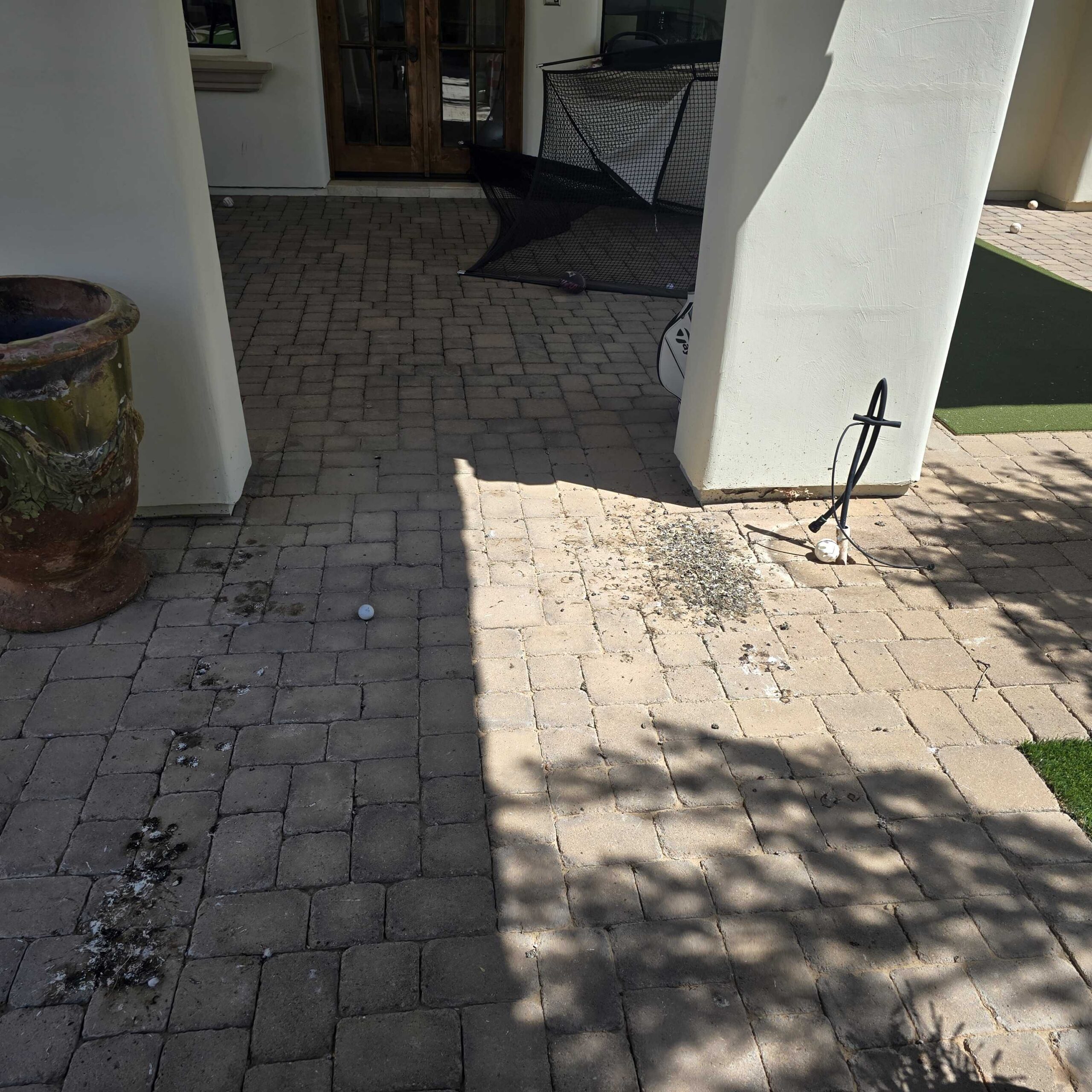
    Pigeon droppings on a driveway may be the first thing you notice, while the source is a sheltered nesting area above it. A useful cleanup plan considers both the visible mess and the places pigeons are using.

    Before booking pigeon droppings removal for a Phoenix-area property, ask what the work includes. Cleanup, nest removal and pigeon proofing are related, but they should not be treated as the same service.

    Identify where the buildup is coming from

    Tell the inspector where droppings appear, where birds gather, and whether you hear activity under the eaves or solar panels. Observations from the ground are enough to start the conversation. There is no need to climb onto a roof or reach into a nesting area to collect more information.

    The inspection should determine whether the visible accumulation is beneath a perch or associated with a sheltered nesting space. That distinction helps define both the cleanup scope and any prevention work.

    Separate waste removal from surface cleaning

    Ask how accumulated droppings and nesting material will be removed before the affected surfaces are cleaned. The plan should account for the material being treated, access limitations and nearby areas that could be affected during the work.

    Also ask what result is realistic. Removing buildup is not the same as repairing damaged materials or guaranteeing that every old stain will disappear. A clear estimate should identify the work included and any separate repair concerns.

    Check whether nest removal is included

    A quote for cleaning a patio may not include an inaccessible nesting area above it. Ask which areas will be inspected, what nesting material is included in removal, and whether roof access or work around solar panels changes the scope. Existing bird activity needs to be assessed before exclusion materials are installed.

    Our pigeon cleanup and nest-removal service is the starting point for discussing the affected areas at your property.

    Plan for the source of the recurring mess

    Cleaning a surface does not close a nesting opening or remove a favorite perch. If pigeons continue using the same location, new droppings can accumulate. Ask whether screening, netting or suitable deterrents should be included in the plan.

    For rooftop activity, see our roof pigeon-control information. For activity beneath an array, ask about solar panel bird proofing alongside the cleanup assessment.

    Questions to ask before scheduling

    • Which surfaces and nesting areas are included?
    • What buildup will be removed, and what access is needed?
    • Are adjacent affected areas included in the cleanup?
    • Does the estimate include proofing or only cleanup?
    • Are any repairs or inaccessible areas outside the scope?

    Arrange a free inspection

    Pigeon Pros Inc helps Phoenix metro homeowners and businesses assess pigeon cleanup and prevention needs. Describe what you can see from a safe location, and we will help you plan the next step. Request a free in-person inspection or call 480-888-8838.

  • Pigeon Abatement: What Should Your Estimate Include?

    Pigeon Abatement: What Should Your Estimate Include?

    If you have been told your property needs pigeon abatement, you may be wondering what you are actually buying. Is the estimate for removing droppings, installing barriers, trapping birds, or all of those things?

    The term describes work to address a pigeon problem, but the word alone does not define the scope. A useful estimate explains the affected areas, the proposed treatment and the work included. For Phoenix-area property owners, those details matter more than comparing two prices without knowing what each covers.

    A description of the problem areas

    Start with the locations. Are pigeons nesting under solar panels, sheltering beneath an overhang, or gathering on exposed ledges? An estimate should make it possible to understand which areas are included. Photos or a walkthrough can help connect the written scope to the places you have noticed activity.

    Cleanup listed separately from prevention

    Removing accumulated droppings and nesting material is different from restricting future access. Ask what cleanup is included, which areas are accessible, and whether the proposed work addresses runoff or mess around the affected area. If a barrier is being installed, ask how the existing nesting activity will be assessed before the opening is closed.

    A reason for the proposed materials

    An estimate should connect each material to a specific need. Screening, netting, bird wire and spikes are not interchangeable. The plan might combine methods because a sheltered nesting space and an exposed perch present different problems.

    Read about our pigeon-control process for the relationship between inspection, cleanup and deterrent installation.

    Clarity about removal or trapping

    Do not assume that every abatement project requires trapping, or that every estimate includes it. Ask whether removal or trapping is recommended for your situation and whether it is included in the quoted scope. Pigeon Pros evaluates trapping when needed as part of the overall plan.

    Coverage and future access

    Ask which treated areas the coverage applies to, what follow-up is included, and how future roof or equipment work could affect the installation. Review the actual written terms rather than assuming that a guarantee covers every part of the property.

    A simple comparison checklist

    • Are both estimates treating the same locations?
    • Do both include the same cleanup work?
    • Are the materials and installation areas described?
    • Are any exclusions or access limitations identified?
    • Is trapping included, optional, or not recommended?
    • Are follow-up responsibilities and coverage clear?

    What determines the cost?

    Access, buildup, the size and shape of the areas to protect, and the proposed materials can change the scope. A free in-person inspection lets Pigeon Pros assess those conditions before preparing recommendations for your property.

    Ready to understand your options? Request a free inspection from Pigeon Pros Inc or call 480-888-8838.

  • Pigeon Proofing: When to Use Mesh, Netting, Bird Wire or Spikes

    Pigeon Proofing: When to Use Mesh, Netting, Bird Wire or Spikes

    A row of spikes cannot solve every pigeon problem. Neither can a roll of mesh. The right pigeon proofing method depends on where birds are landing, where they are nesting, and how they reach those spaces.

    For a Phoenix-area home, the problem might involve a sheltered roof corner, a narrow ledge, or an opening beneath solar panels. A useful inspection distinguishes these areas before recommending materials. Here is how to compare the options.

    Start with the space pigeons are using

    There is a practical difference between discouraging pigeons from landing on a surface and blocking access to a nesting area. A deterrent placed on an exposed perch does not close a sheltered opening nearby. Ask the inspector to show you the specific locations being treated and explain how each part of the plan addresses the activity there.

    Mesh screening for accessible openings

    Screening can help close suitable openings around sheltered areas. Solar panel bird proofing also uses an exclusion approach: the accessible perimeter needs to be assessed along with existing nesting activity and cleanup needs. The installation should be planned for the equipment and structure involved, including appropriate attachment methods and any manufacturer requirements.

    If pigeons are using your array, start with our solar panel bird proofing service. Do not reach beneath panels or try to close openings from the roof yourself.

    Netting for larger sheltered spaces

    Some spaces are too large or awkward for a small strip of screening. Properly planned netting can restrict access to selected alcoves, overhangs and other sheltered areas. The scope should account for the boundaries of the space, attachment points and any access needed for maintenance.

    Bird wire and spikes for suitable perching surfaces

    Bird wire and spikes may suit certain ledges or roof features where pigeons land. They serve a different purpose from enclosing a nesting space. Ask why a particular deterrent fits that surface and how the plan addresses nearby places birds could use instead.

    Our roof pigeon-control page explains how these different problem areas can fit into a property-specific plan.

    Five questions to ask before approving pigeon proofing

    • Which nesting and roosting areas are included?
    • What existing nesting material and droppings need removal?
    • Why is each proposed material appropriate for that location?
    • How will the installation accommodate maintenance access?
    • What coverage applies to the work and the treated areas?

    Does cleanup alone count as pigeon proofing?

    Cleanup addresses the existing buildup. Proofing addresses access or perching opportunities. They often belong in the same plan, but they are different tasks. Be sure the estimate makes that distinction clear.

    Get a plan for your property

    Pigeon Pros Inc offers free in-person inspections across the Phoenix metro area. Tell us where you see birds or droppings, and we can assess the areas that need attention. Request your inspection or call 480-888-8838.

  • Pigeon Removal from Roof Recesses: The Nesting Areas Homeowners Miss

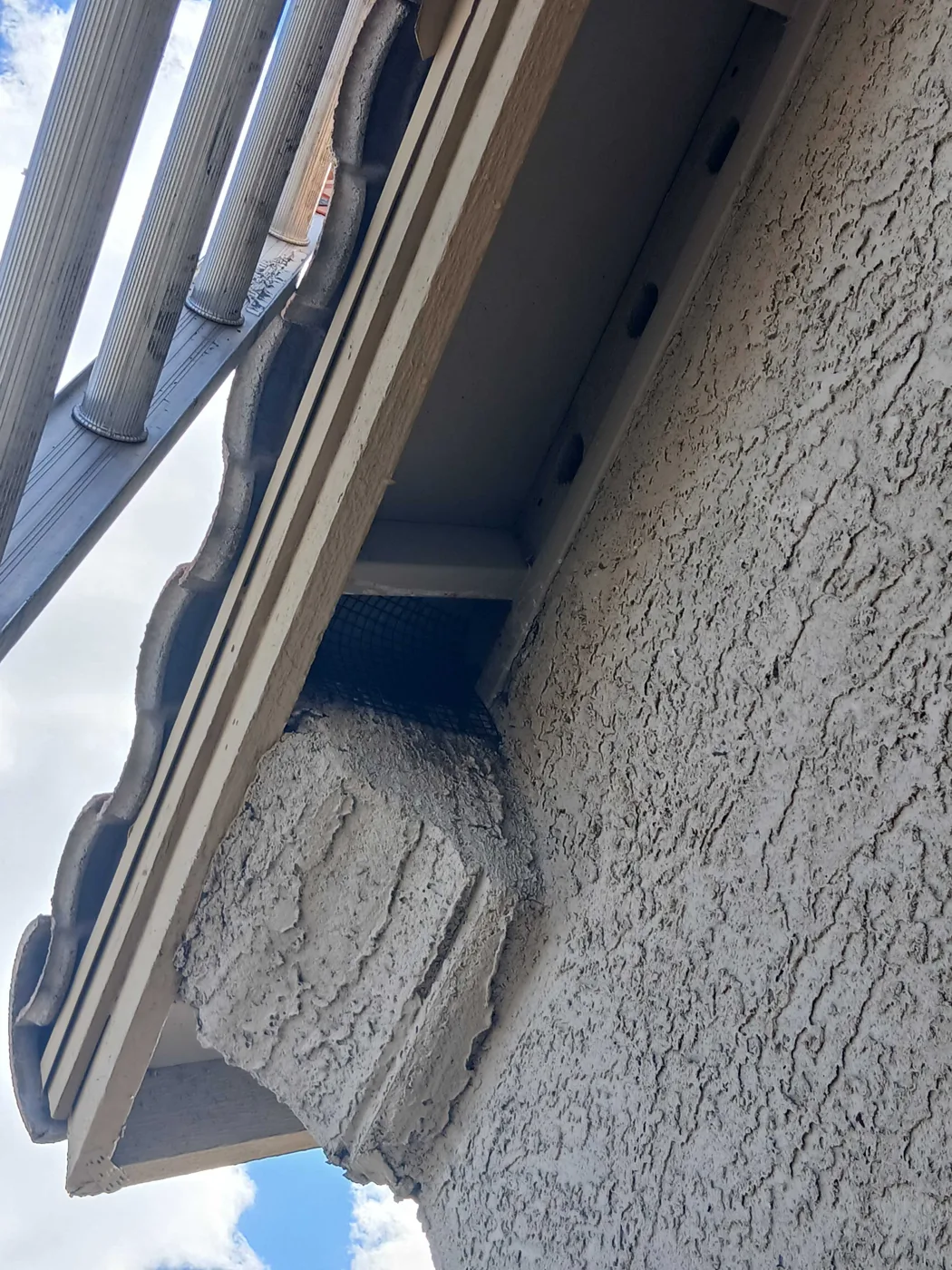
    A pigeon problem is not always centered on solar panels. Birds may be using a sheltered roof intersection, a recess behind a decorative tower, or a ledge that is difficult to see from the driveway. The droppings below can be more obvious than the space above them.

    When requesting pigeon removal, tell the inspector about these less-visible areas as well as the birds you see on the roofline. Understanding the layout of the problem helps define the work that is needed.

    Look for a pattern from the ground

    You may notice pigeons repeatedly disappearing behind the same part of the building. Another clue is a recurring patch of droppings beneath an overhang. Sounds above an entry or beside an upstairs room can help identify an area to discuss, although sound alone does not establish exactly where birds are nesting.

    Make a note of the location. A photograph from a safe ground-level position can help explain it. Leave roof access and a closer examination to the inspection.

    Distinguish the perch from the sheltered space

    A visible ledge and a nearby nesting recess are different parts of the property. An installation intended for the ledge may not close access to the recess. Similarly, protecting the edge of a solar array does not automatically address a separate roof intersection.

    Ask the inspector to explain which locations are being treated and what each part of the proposed installation is intended to do. This is especially useful when the building has several roof heights or decorative features.

    Ask about the full opening

    For a recessed area, ask how the proposed protection will fit its shape. Corners, adjoining surfaces, and existing materials deserve attention. A useful estimate describes the area to be protected instead of simply listing a length of mesh or netting.

    The appropriate approach depends on the structure. Pigeon Pros Inc assesses the site before recommending screening, netting, or other deterrents. See our roof, eave, and ledge pigeon control options for an overview.

    Include cleanup in the conversation

    Ask whether the estimate covers the nesting material and droppings in the affected recess, along with any accessible surfaces below it. The cleaning method should suit the material, condition, and access.

    Cleanup and exclusion serve different purposes: one addresses the existing mess, while the other addresses access to the protected space. Our pigeon cleanup and nest-removal page explains that part of the work.

    Know what to report after the work

    If you see activity after an installation, describe the precise location. A bird standing on an unrelated roof edge is a different observation from a bird entering the protected recess. That distinction helps the company understand the concern and discuss an appropriate next step.

    Keep your estimate and any completion photographs so you can identify the treated areas. Ask about the written coverage for your project rather than assuming every part of the roof is included.

    Get the hidden areas checked

    If pigeons keep disappearing into a roof recess, request a free in-person inspection from Pigeon Pros Inc. We serve Phoenix metro homes and businesses. Call 480-888-8838 and tell us which part of the property is affected.

  • Pigeon Removal in Phoenix Metro: How to Prepare for Your Inspection

    If you are arranging pigeon removal, you do not need to know which material belongs on your roof or how many nests are hidden from view. Your most useful preparation is to describe what you have noticed and help the inspector understand access to the property.

    This checklist is for homeowners and property managers preparing for an inspection in the Phoenix metro area. It does not require getting on the roof or disturbing a nest.

    Write down where you see the activity

    Be specific about locations you can identify from the ground: above the garage, behind a front tower, beside the upstairs window, or along the edge of the solar panels. If the droppings collect in a different place from where the birds land, mention both.

    Describe how long you have noticed the activity and whether the birds return at particular times. You do not need an exact bird count. An estimate and a clear location are a useful starting point.

    Explain what has already been tried

    Let the inspector know about any previous cleanup, screening, netting, spikes, or other deterrents. If you have an earlier estimate or installation photographs, keep them available. Also mention recent roofing, painting, or solar work that may have affected access to the nesting areas.

    This helps the inspection focus on what is present now. It does not mean every existing installation needs to be replaced.

    Share access and scheduling details

    When arranging the visit, mention locked gates, pets, limited parking, or areas that require a property manager’s permission. For a commercial site, identify the person who can discuss access around deliveries, customers, or equipment.

    If the property is managed by an HOA or another owner, ask who must approve the proposed work. Have that conversation before setting an installation date. An inspection request is not a confirmed appointment until scheduling has been arranged.

    Ask how the removal plan fits together

    Use the visit to understand three things: where pigeons are using the building, what cleanup is proposed, and how those areas will be protected. Ask the inspector to explain any location that is outside the estimate.

    The phrase “pigeon removal” can cover different work. Our guide to pigeon removal services provides background, while our pigeon control process explains the sequence used to plan the work. Whether trapping is appropriate depends on the property and the control plan.

    Keep a few questions ready

    • Which areas are included in the estimate?
    • What cleanup and exclusion materials are proposed?
    • What preparation will you need from me before installation?
    • How will I know what work was completed?
    • What guarantee, if any, applies to this project?

    A written estimate should help you understand the work you are authorizing. Ask for clarification if a description is too broad to tell what will actually be done.

    Arrange your free inspection

    Pigeon Pros Inc offers free in-person inspections for homes and businesses across Phoenix metro. Send an inspection request or call 480-888-8838. Share your service address and what you can observe from the ground; we can discuss the rest with you.

  • Pigeon Control Near Me: What to Ask Before Hiring a Local Company

    Searching for “pigeon control near me” is usually the first step after noticing droppings on the patio, hearing birds above a bedroom, or seeing pigeons disappear into a sheltered part of the roof. The next step is choosing a company that can explain what is happening at your property and what its proposed work will address.

    Before comparing prices, ask a few practical questions. A clear inspection and written scope give you something more useful to compare than a promise to “get rid of the birds.”

    Will you inspect the places the pigeons are actually using?

    Tell the company where you see birds entering, where the mess appears, and whether the activity changes during the day. A cluster of pigeons on a ridge may be easier to spot than a nesting space behind a decorative tower. Ask whether the inspection will consider both visible perches and sheltered areas.

    You do not need to climb onto your roof to answer these questions. Observations and photographs taken safely from the ground can help you describe the problem.

    What does the estimate include?

    Ask the company to identify the areas it plans to clean and protect. If an estimate says “pigeon removal,” find out whether that includes nesting-material removal, droppings cleanup, screening, netting, or other deterrents. Ask whether existing damaged materials will be removed or repaired.

    A quote covering one roof recess is different from a quote covering several recesses, a solar array, and affected ledges. Make sure you understand the boundaries of the work.

    Why is this method suitable for my property?

    A useful explanation connects the proposed material to a specific part of the structure. Screening may close an opening; netting may protect a larger sheltered space; bird wire may be considered for an appropriate perch. Ask why each method has been selected and how the installation will fit the building.

    Our pigeon control services page explains the main options. The inspection determines which ones are appropriate for your situation.

    What happens if I notice activity afterward?

    Ask how to report a concern and what information the company needs. Find out whether a follow-up concerns a treated area or a different part of the property. Read the written guarantee rather than assuming it covers every location a bird might use.

    At Pigeon Pros Inc, a five-year guarantee is available in some cases. Ask which terms apply to your estimate before authorizing the work.

    Do you serve my address?

    A local search result is a starting point. Confirm that the company serves your address and can arrange an inspection. Pigeon Pros Inc serves homes and businesses across Phoenix metro, including Mesa, Gilbert, Chandler, Queen Creek, and Surprise.

    If you need pigeon control near you, request a free in-person inspection or call 480-888-8838. Tell us what you are seeing, and we will discuss the next step for your property.

  • Is Professional Pigeon Control Worth It? A Phoenix Guide

    Is Professional Pigeon Control Worth It? A Phoenix Guide

    Professional pigeon control is worth considering when birds repeatedly use a roof recess, solar array, or other space you cannot safely inspect and protect yourself. The value comes from identifying access points and installing suitable exclusion, rather than repeatedly chasing birds away.

    For Phoenix-area property owners, the decision should start with the location and scope of the problem. This guide compares practical maintenance you can handle from accessible areas with situations that call for an in-person assessment. Pigeon Pros has served Arizona since May 1999.

    For help at your property, explore our professional pigeon control services or see our Phoenix pigeon control projects and service information.

    When a professional inspection makes sense

    Consider an inspection if pigeons keep returning after cleaning, if birds disappear beneath solar panels, or if activity affects more than one part of the building. A sheltered nesting pocket can be difficult to identify from the location of the droppings alone.

    • Repeated activity in roof returns, sheltered ledges, or covered entries.
    • Access beneath a solar array or around rooftop equipment.
    • Old screening, netting, or spikes that no longer keep birds out of the intended area.
    • Several buildings or tenant areas that need one coordinated plan.
    • Work that requires roof access or specialist equipment.

    Take observations from the ground. You do not need to climb onto the roof to decide whether to request help. Photographs of the birds, entry locations, and affected surfaces can make the initial discussion more useful.

    What you can do before hiring someone

    Secure food waste, collect spilled pet food or birdseed, and note where birds are feeding. Tell tenants or family members about the plan so feeding does not continue elsewhere on the property. Report leaks or drainage problems to the appropriate maintenance person.

    These steps can support pigeon control, but they do not close an established nesting space. Avoid buying products solely because the packaging shows a pigeon. A product must fit the actual surface, opening, and bird activity to be useful.

    Compare the work, not just the product price

    The price of a roll of mesh or a strip of spikes is only one part of an installation. A proposal may also involve access equipment, attachment hardware, fitting around corners, cleanup, and arrangements for future maintenance. Ask for a written scope so you know what is included.

    Compare these items across estimates:

    1. Protected areas: which openings, ledges, canopies, or solar arrays are included?
    2. Cleanup: which surfaces and accessible nesting material will be addressed?
    3. Materials: what barrier or deterrent is recommended, and why does it fit?
    4. Attachment: how will the work account for the roof, equipment, drainage, and ventilation?
    5. Access: are lifts, tenant coordination, and equipment servicing needs included?
    6. Coverage: what written guarantee, if any, applies to this project?

    A lower quote for one roof recess cannot be compared directly with a quote for that recess plus several additional openings and cleanup. Resolve differences in scope before deciding which estimate offers better value.

    Price matching against our main competitors

    Pigeon Pros offers price matching against our main competitors. Bring the competing quote to us so we can review the proposed work and discuss the price match with you. Compare the protected areas, cleanup, materials, and access arrangements as well as the total price.

    What affects professional pigeon control cost?

    Access difficulty, building height, the number of affected areas, cleanup requirements, attachment surfaces, and the condition of existing materials can all affect the work. A small opening in a difficult location may require more preparation than a larger opening with straightforward access.

    Pigeon Pros provides a free in-person inspection so the recommendation reflects the property. This article does not assign a universal price or payback period. If you have already spent money on repeated cleanup or deterrents, share that history during the inspection so the remaining problem is clear.

    Why exclusion matters after birds leave

    Removing birds from a location does not by itself change the route back. A fitted exclusion system restricts access to the area it protects. Suitable options can include screening, bird netting, birdwire, spikes, or solar-panel perimeter screening, depending on the site.

    The space must be inspected before closure so birds are not enclosed. Required ventilation, drainage, and equipment access also need to remain available. Ask the installer to explain how those requirements are handled instead of choosing a method by name alone.

    Our inspection and pigeon control process explains how the proposed work is developed. For recurring activity after an installation, use our deterrent service information to understand the types of areas that may need assessment.

    Set realistic expectations for cleanup and coverage

    Confirm cleanup separately from exclusion. The estimate should identify what can be reached, which surfaces are included, and whether staining or building repairs fall outside the scope. See our pigeon cleanup service for more information.

    Ask which areas remain untreated. Birds on an untreated ledge are a different issue from birds entering behind a newly installed barrier. Completion photographs and a clear written scope help you report later activity accurately.

    Guarantee eligibility, duration, labor charges, and other conditions depend on the written project terms. Review our guarantee and coverage information and confirm what applies to your estimate.

    Frequently asked questions

    Is professional pigeon control always necessary?

    No. Basic accessible property maintenance can reduce attractions. Repeated nesting, difficult access, or a barrier installation calls for a more detailed assessment. A free inspection can help establish the scope before you commit to work.

    Will a professional guarantee a completely pigeon-free neighborhood?

    A project should specify the areas being protected and any applicable coverage. Excluding birds from your roof recess does not control their activity on surrounding buildings or untreated surfaces.

    What should I ask before approving an estimate?

    Ask which areas are included, how occupied spaces are checked, what cleanup is included, how materials will be attached, and what written guarantee applies. Also discuss future roof and equipment access.

    Request an inspection before buying more deterrents

    Request a free in-person pigeon control inspection or call 480-888-8838. Pigeon Pros serves homes and businesses across the Phoenix metro area and can explain options suited to the spaces birds are using.

  • Pigeon Control: 7 Steps to Keep Pigeons from Returning

    Pigeon Control: 7 Steps to Keep Pigeons from Returning

    To keep pigeons from returning, identify the spaces they use and block access with a properly fitted exclusion system. Cleanup and reducing food sources support the work, but they do not close an open nesting pocket.

    This pigeon control checklist is for Phoenix-area homeowners who have chased birds away, cleaned the same spot repeatedly, or tried a deterrent without lasting relief. Pigeon Pros has served Arizona since May 1999. These seven steps help you prepare for an inspection and maintain the areas protected afterward.

    For help at your property, explore our professional pigeon control services or see our Phoenix pigeon control projects and service information.

    1. Record exactly where pigeons return

    Watch from the ground or another safely accessible location. Note where birds land, where they disappear, and where fresh droppings collect. A bird sitting on a ridge may be nesting in a nearby roof recess rather than on the ridge itself.

    Photograph the same areas over several days. Tell the inspector whether activity is beneath solar panels, behind a sign, inside a roof return, or above a covered patio. These details help separate the access point from the mess below it. Avoid climbing onto the roof to investigate.

    2. Reduce accessible food and water

    Keep waste containers closed, collect spilled pet food and birdseed, and discuss intentional feeding with people using the property. Have leaks or drainage problems assessed where practical. Do not alter roof drainage or equipment to remove water.

    These changes can reduce attractions, but an established sheltered nesting space may remain attractive even when you stop feeding birds. Treat food management as part of the plan rather than a promise that pigeons will leave within a set number of days.

    3. Inspect concealed spaces before closing them

    An opening that appears empty from below may contain birds or occupied nests. Before screening or netting is installed, the full space needs inspection. Never seal birds behind a barrier. Ask how the installer will handle any birds or occupied nests found during the work.

    The inspection should also look for alternate entrances. Closing the most visible gap while leaving a corner open can allow continued access to the same space. Our pigeon control process starts with assessing the property before recommending a solution.

    4. Match the barrier to the problem area

    • Roof recesses and openings: fitted screening or suitable netting may restrict access to the sheltered space.
    • Covered patios and larger recesses: a netting system may be appropriate when a secure perimeter and maintenance access can be provided.
    • Exposed ledges: birdwire or spikes may suit specific perching surfaces when coverage matches how birds use them.
    • Solar arrays: suitable perimeter screening should account for brackets, wiring, airflow, and future servicing.

    Read more about pigeon deterrent installation and solar panel bird proofing. Ask why the proposed method fits your roof. A ledge deterrent will not close a separate opening under solar panels.

    5. Arrange cleanup as part of the scope

    Confirm which surfaces and accessible nesting material are included in the cleanup work. Tell the inspector about existing deterrents, staining, and any areas you cannot see clearly. Ask whether repairs to roofing or other building materials require a separate contractor.

    Cleanup removes existing material; exclusion addresses access. Having the roof cleaned without closing the nesting space leaves the route back available. Likewise, installing a barrier does not automatically include every cleanup task unless the estimate specifies it.

    6. Check the finished perimeter and protected areas

    Ask the installer to show you completion photographs and identify the exact areas treated. Corners, penetrations, uneven roof surfaces, and access panels deserve attention. Understand which nearby ledges or recesses remain untreated.

    Pigeons elsewhere on the roof do not necessarily mean a barrier has failed. Birds entering the protected space, a loose screen edge, or a gap opened during maintenance calls for a closer look. Document the location so the team can assess the specific issue.

    7. Recheck after roof or solar maintenance

    Let roof, solar, HVAC, and sign contractors know where exclusion materials are installed. After other work, check accessible areas for disturbed screening or netting. Do not remove or modify the installation without discussing how access will be restored.

    Keep your estimate and any written guarantee together. Guarantee eligibility and coverage vary by project; confirm the applicable terms rather than assuming every part of the property is covered.

    Common questions about keeping pigeons away

    Will a fake owl solve an established pigeon problem?

    We do not recommend relying on a decoy to protect an open nesting space. It does not physically prevent access. See our discussion of plastic owl deterrents before buying another scare device.

    Why are pigeons returning after screening was installed?

    Possible explanations include a remaining entrance, loose material, an untreated nearby space, or damage from later maintenance. An inspection is needed to distinguish these situations; seeing birds somewhere on the property is not enough to identify the cause.

    Can one installation protect the whole roof?

    That depends on the design and scope. Ask which openings and perching surfaces are included and which are outside the estimate. A barrier protects the area it encloses, not every nearby surface.

    Get a pigeon control plan for your home

    Pigeon Pros provides free in-person inspections across the Phoenix metro area. Request your free pigeon control inspection or call 480-888-8838. We will assess the spaces birds are using and explain suitable cleanup and exclusion options.